Client
Charitable Foundation "Konstruktor"
Typology
Education
Year
2025
Status
In development
Stage
Concept
Size
17000 m2
Discipline
Architecture, landscaping
Location
Argatov Khutor, Krasnodar Krai, Russia
The task was to design a campus for 450 students, incorporating a full-cycle school and on-site residential accommodation for children. The uniqueness of the project lies in the fact that the boarding facilities are designed to accommodate not only senior students but also primary school children.
In addition, the project required the possibility of independent operation and controlled access to various functional zones (the sports and wellness complex with a stadium, boarding facilities, and the academic/research block), enabling their use by external visitors.
Our work began with the development of a detailed Functional and Technological Brief, which allowed for efficient spatial planning and helped prevent excessive floor area usage. At this stage, pedestrian and vehicular circulation systems were carefully considered, and complex multifunctional spaces were integrated into the design, such as an atrium combined with an assembly hall and a forecourt designed for fairs and public events.
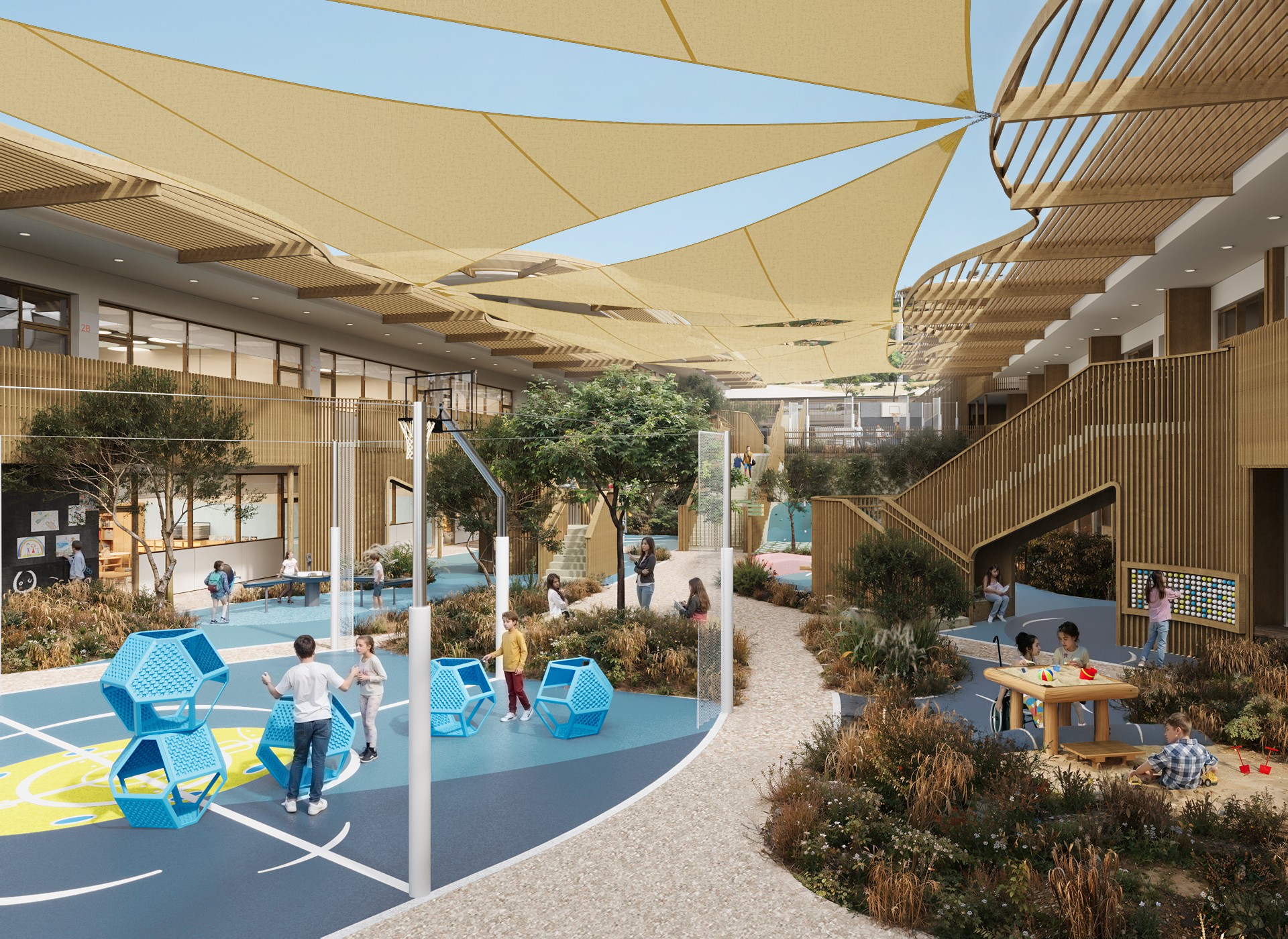
The meta-idea of the project defines it as a next-generation educational environment. It is not merely a boarding school, but a comprehensive ecosystem in which architecture and pedagogy are unified.
The concept is based on a synthesis of local identity and contemporary approaches to the organization of educational spaces. This balance enables the creation of an environment that reflects its cultural context while meeting current requirements for learning, sustainability, and comfort.
The architectural model is developed according to principles of modularity and functional zoning, ensuring adaptability to various site conditions without compromising structural logic or overall integrity. This approach makes the project scalable and reproducible while preserving its distinctive character.

Principles used in the project
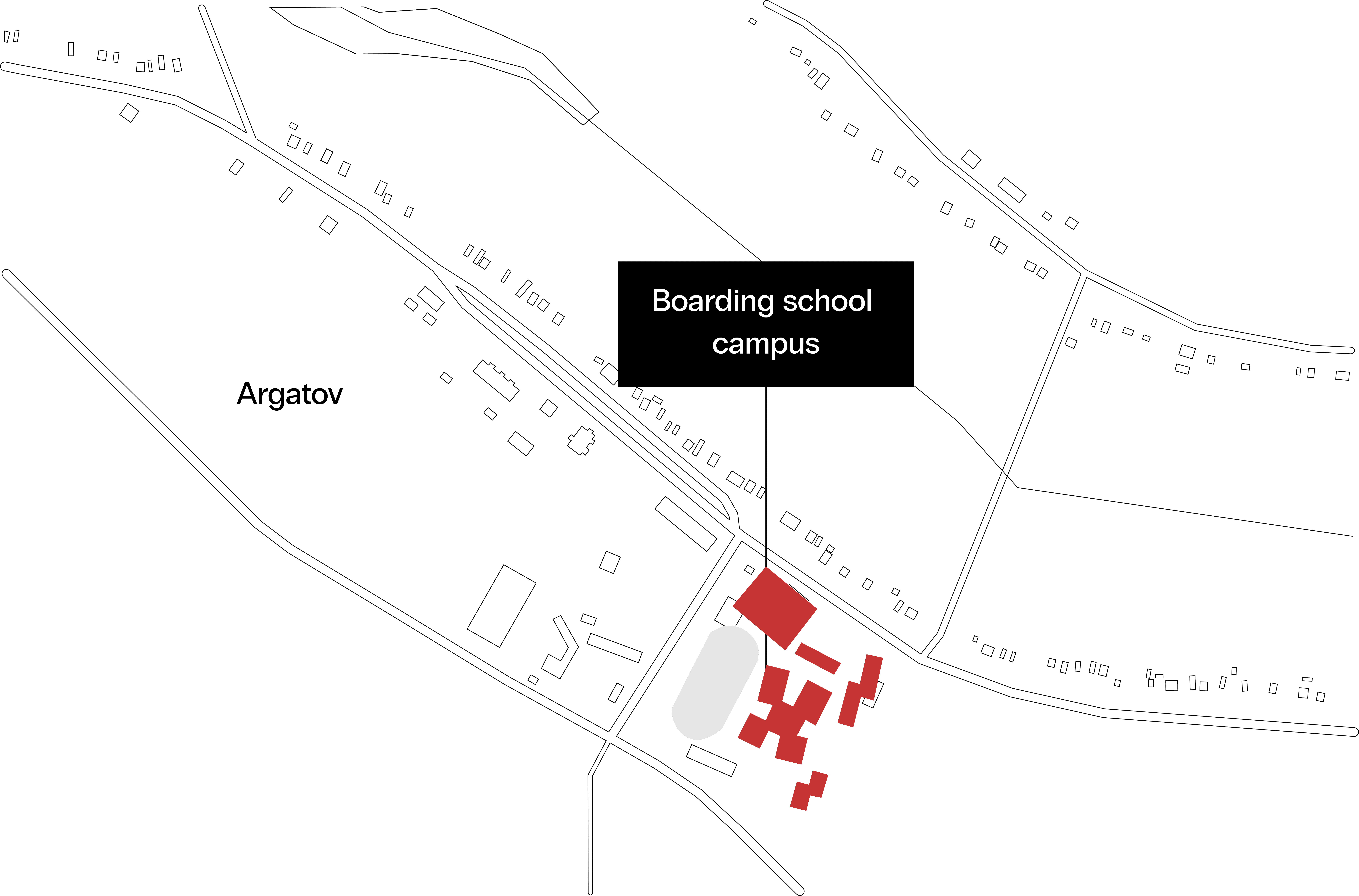
The school building is located in the central part of the site. To the left of the school, closer to the daily access entrance, the sports and wellness complex is situated, with the stadium positioned further downslope. To the right of the school, at a distance from the sports facilities to minimise noise impact, the boarding facilities for primary and middle school students are located.
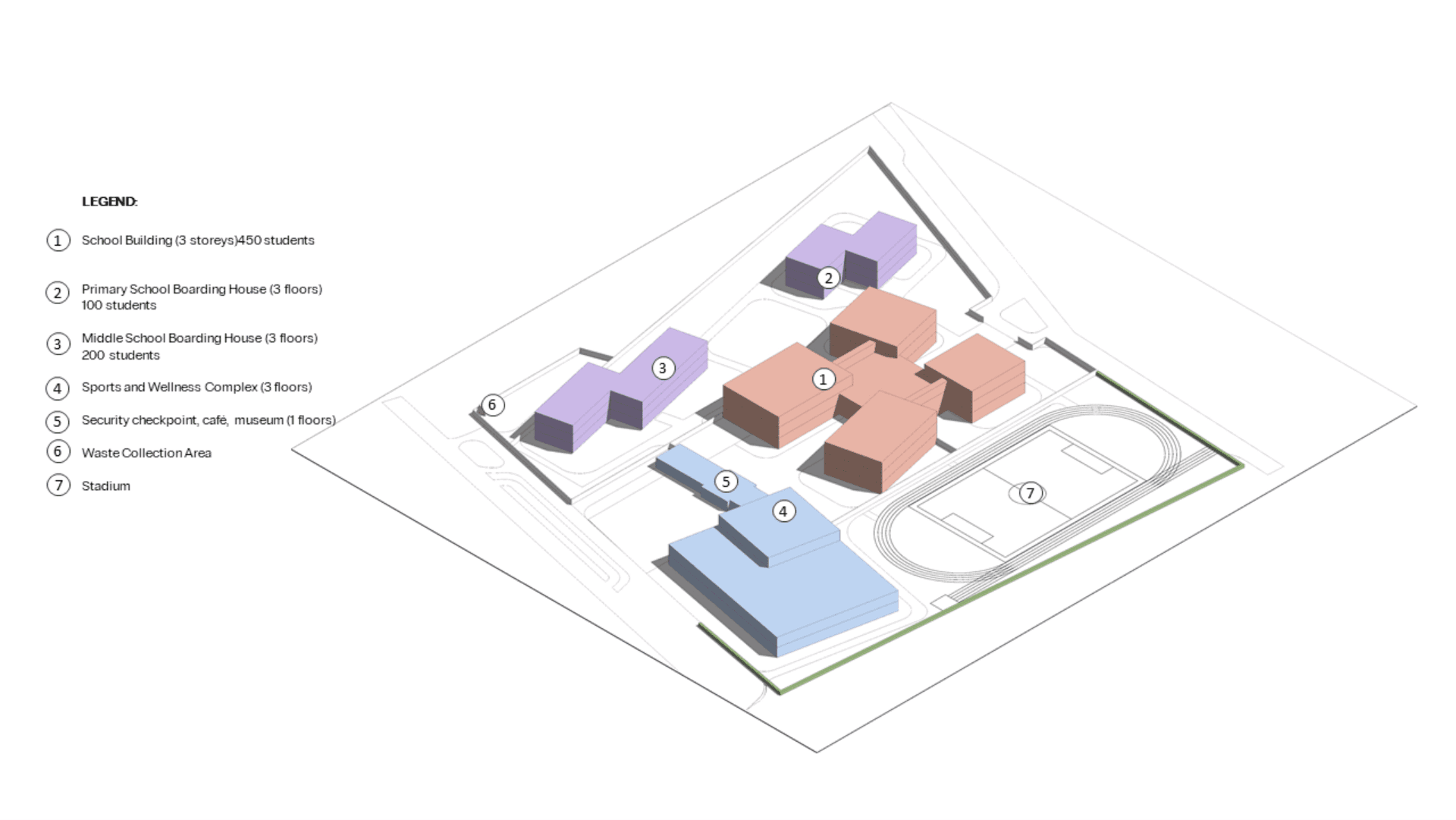
Functional and planning model of the campus
Several options for functional zoning of the site were developed. In the selected option, the site’s planning structure is organised along a main compositional axis connecting two access points:
The ceremonial entrance is arranged on the south-western side, oriented toward the highway, and is intended exclusively for passenger drop-off.
The daily entrance is located on the north-eastern side of the site and includes a drop-off area, car parking, bicycle parking, and a public square accessible to all residents of the khutor. The public square is separated from the school area by the checkpoint, café, and museum buildings, ensuring student safety and a clear and comfortable separation of pedestrian and vehicular flows. Parking areas are located outside the school grounds and are separated from them by a pedestrian promenade.
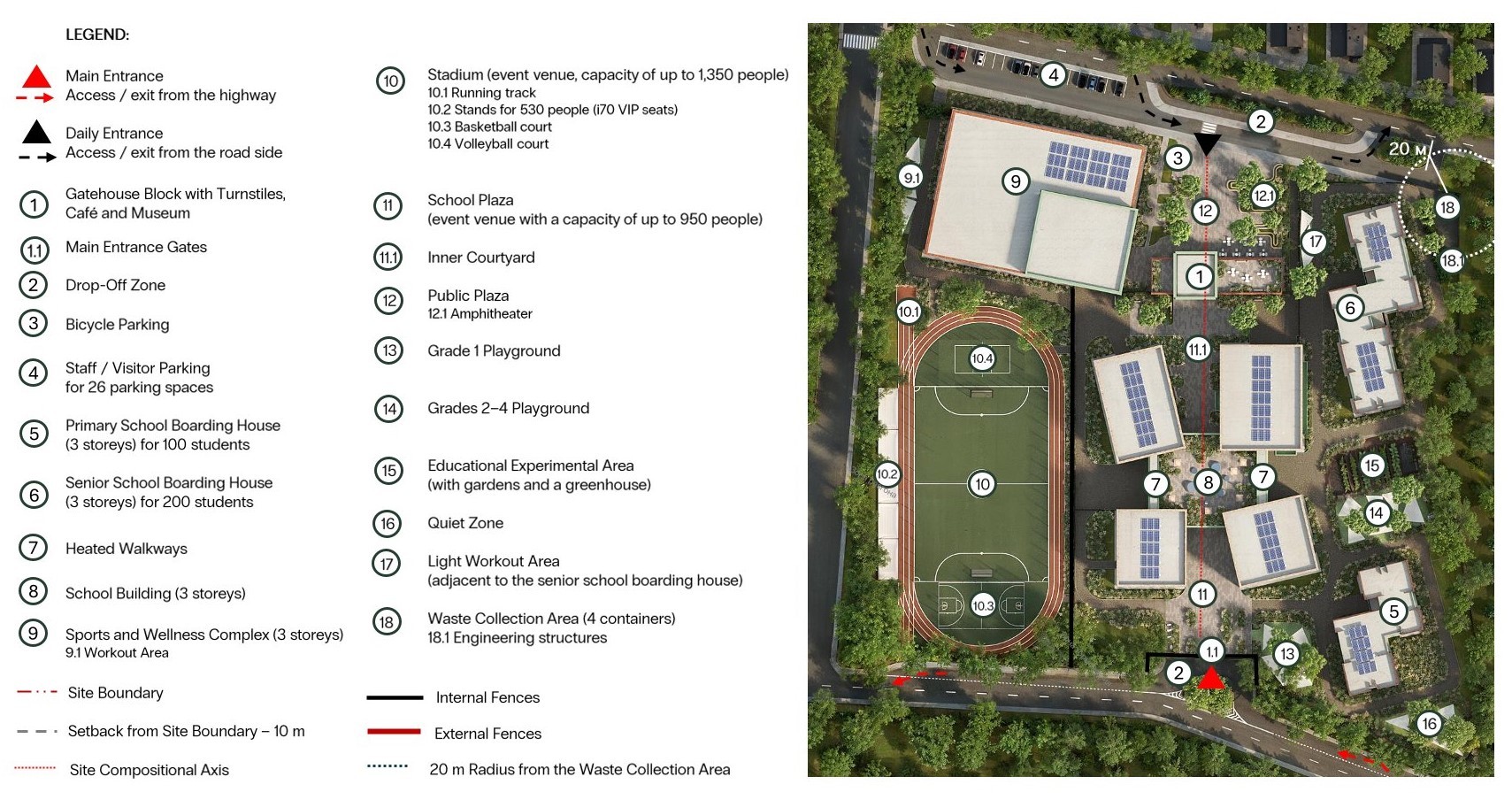
Master plan
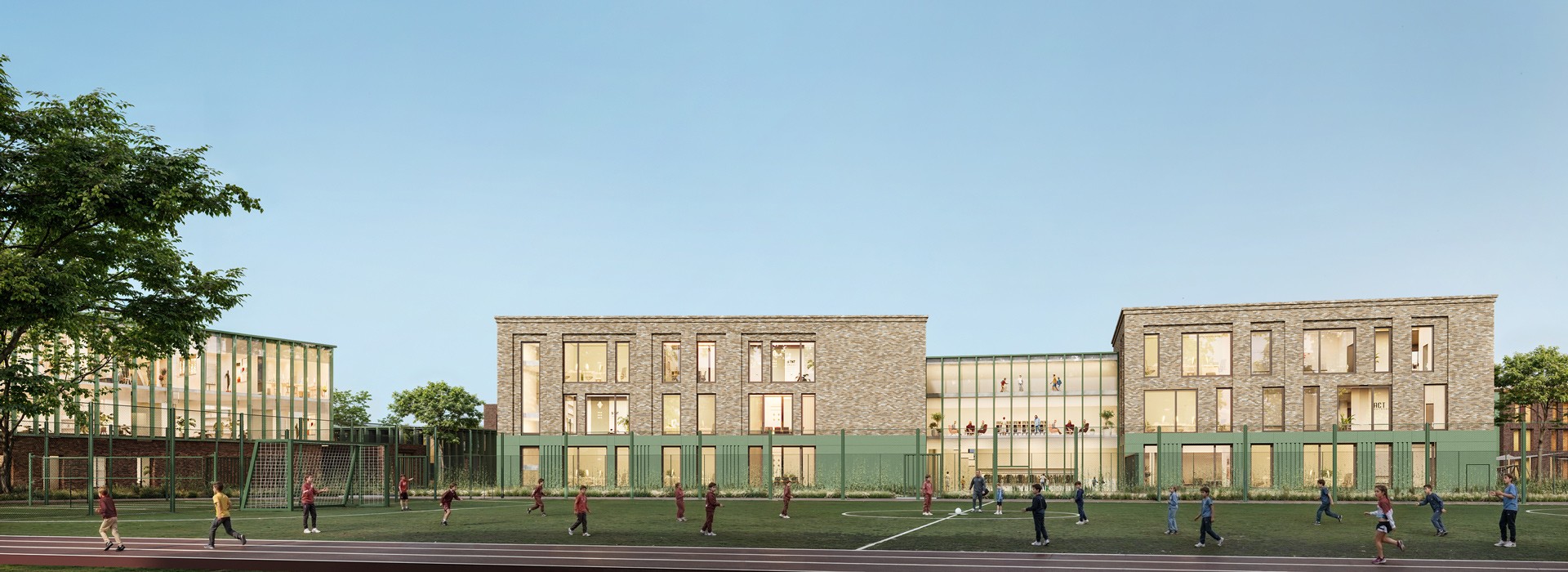
View of the stadium, the school, and the sports and wellness complex
The campus territory is divided into three main zones:
Public Zone — the square adjacent to the daily access entrance, as well as the Museum and Café, which are accessible to residents throughout the day.
Zone Accessible to External Visitors After 5:00 PM, which includes: Sports Zone comprising the sports and wellness complex building, the stadium, outdoor sports courts, and a workout area; and FabLab, Natural Sciences, Arts, and Music Block, featuring a dedicated and independent entrance.
Primary School Zone — a secured area intended exclusively for students and staff.
Primary and Secondary School Boarding Facilities — during the summer period, the boarding facilities may be used as a children’s camp or as a hotel.
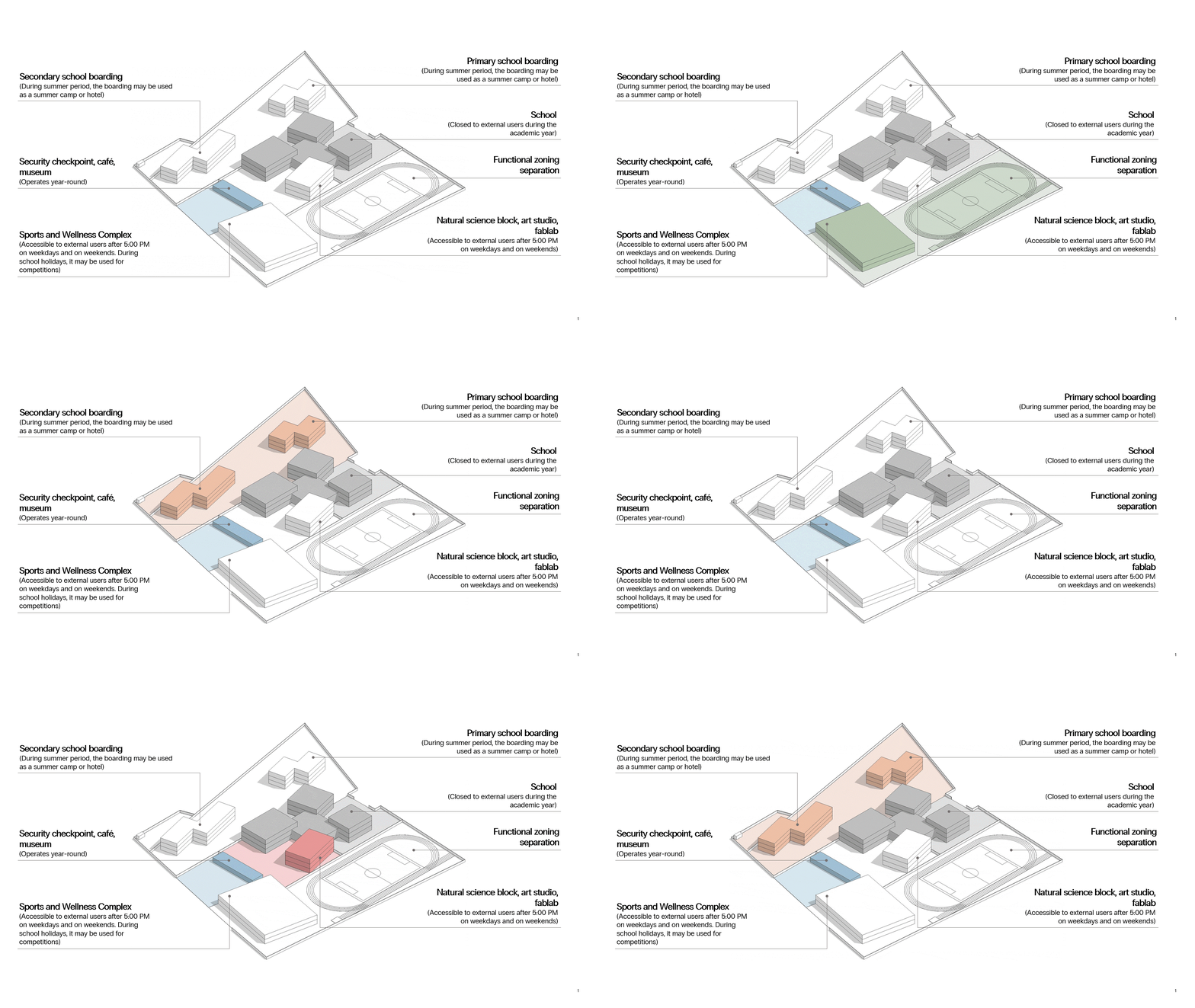
Strategy for zoning and isolation of school blocks for shared use with external visitors
The volumetric and spatial configuration of the school complex reflects its functional structure.
The school building is conceived as a composition of simple and restrained volumes, shaped by efficient functional zoning and the selected architectural language. The overall composition consists of four blocks unified by a shared two-storey amphitheatre volume. In this configuration, the classroom blocks are rotated relative to the amphitheatre, opening up the building, emphasising the main entrance, and reducing direct visual overlap between facing classroom windows.
The school building accommodates educational units for primary school students, a secondary school teaching unit, the Natural Sciences Block, FabLab, and Arts and Music facilities. The Natural Sciences, FabLab, and Music blocks may be isolated to allow controlled access for external visitors.
The catering facilities, dining areas, medical unit, library, and administrative offices are organised as distinct functional zones, with the administrative block located on the third floor. This planning approach ensures clear functional relationships between different programmatic components while maintaining the required level of separation and autonomy for individual educational units.
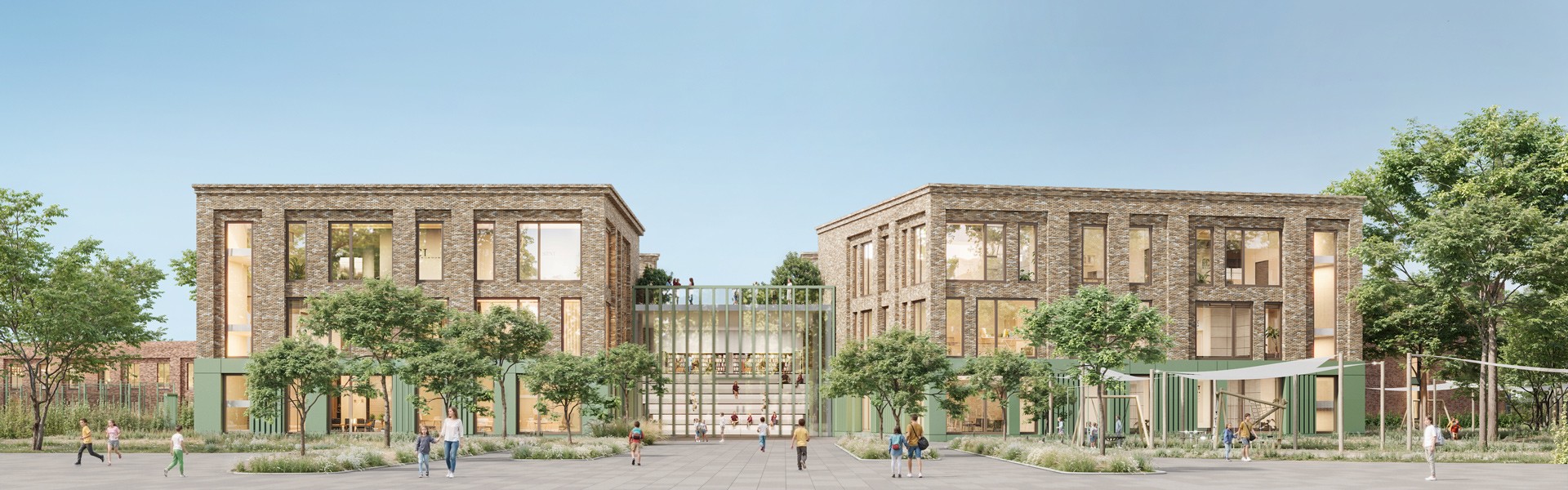
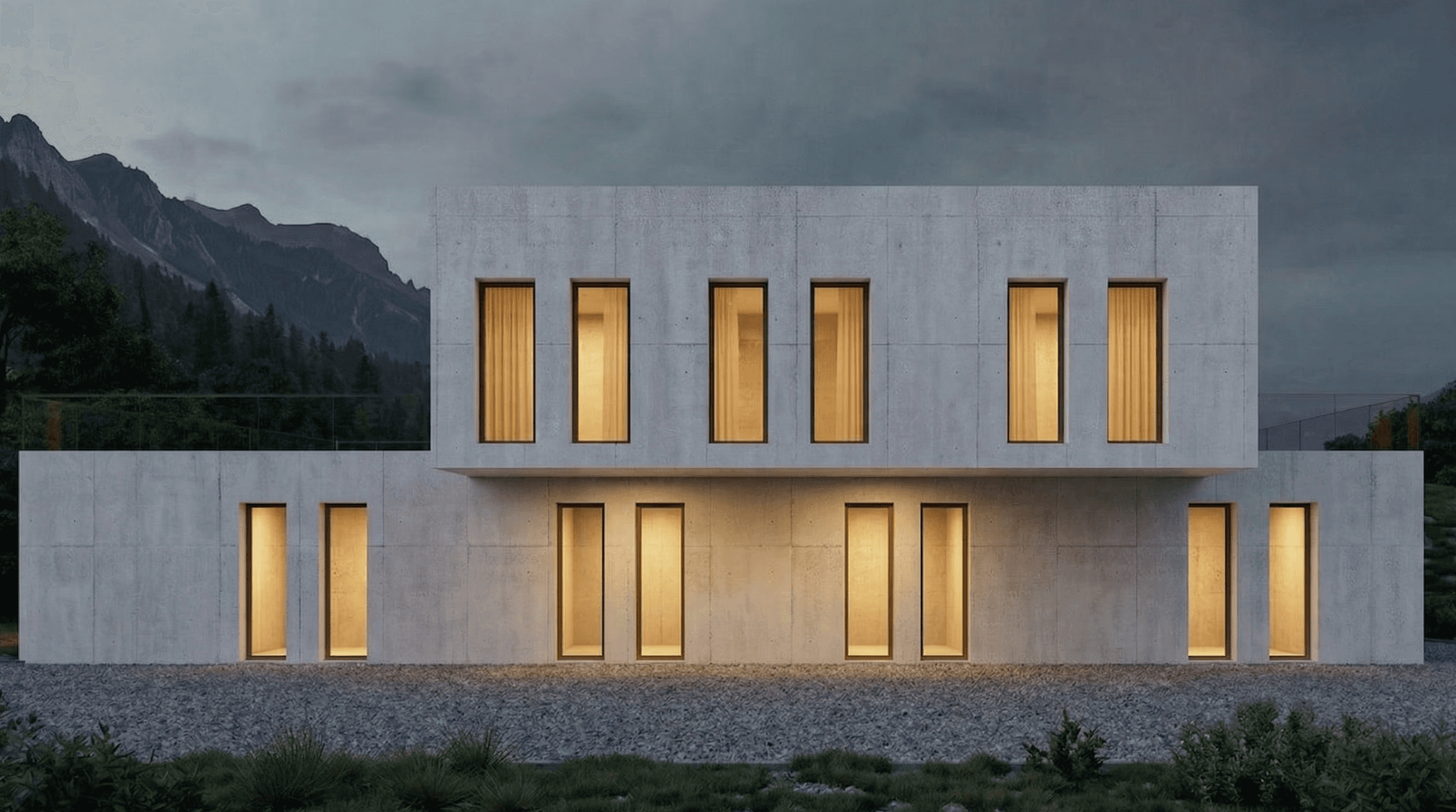
Facade design option. View of the school from the main entrance
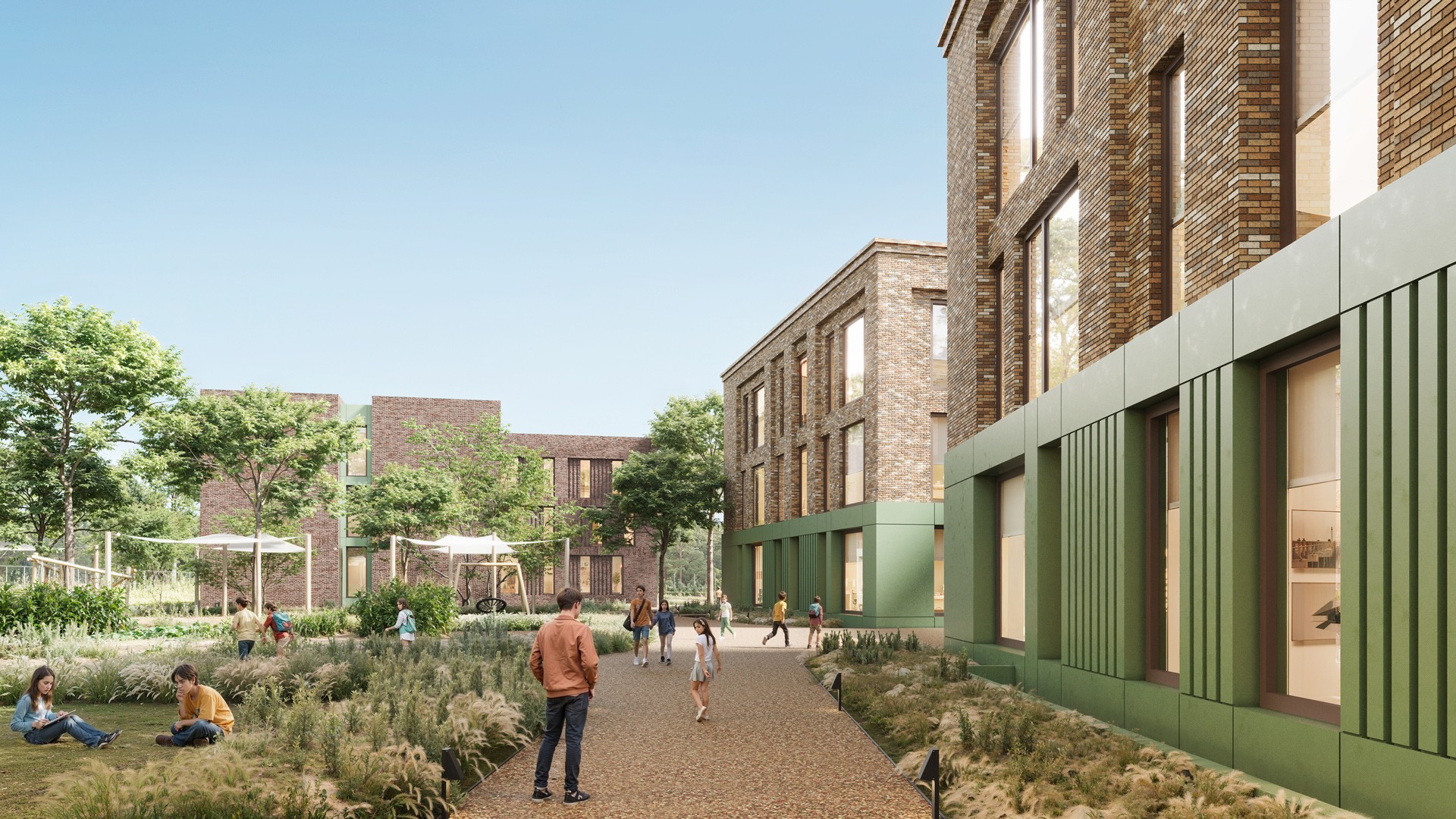
View of the school and the primary school boarding house
The boarding facilities for primary and secondary school students are located along the right side of the site. Each building is provided with a private outdoor terrace for recreation. Playgrounds for grades 1–4 are located adjacent to the primary school boarding facility. An educational and experimental zone with vegetable gardens and a greenhouse is situated between the two boarding buildings. The secondary school boarding facility includes a dedicated workout area.
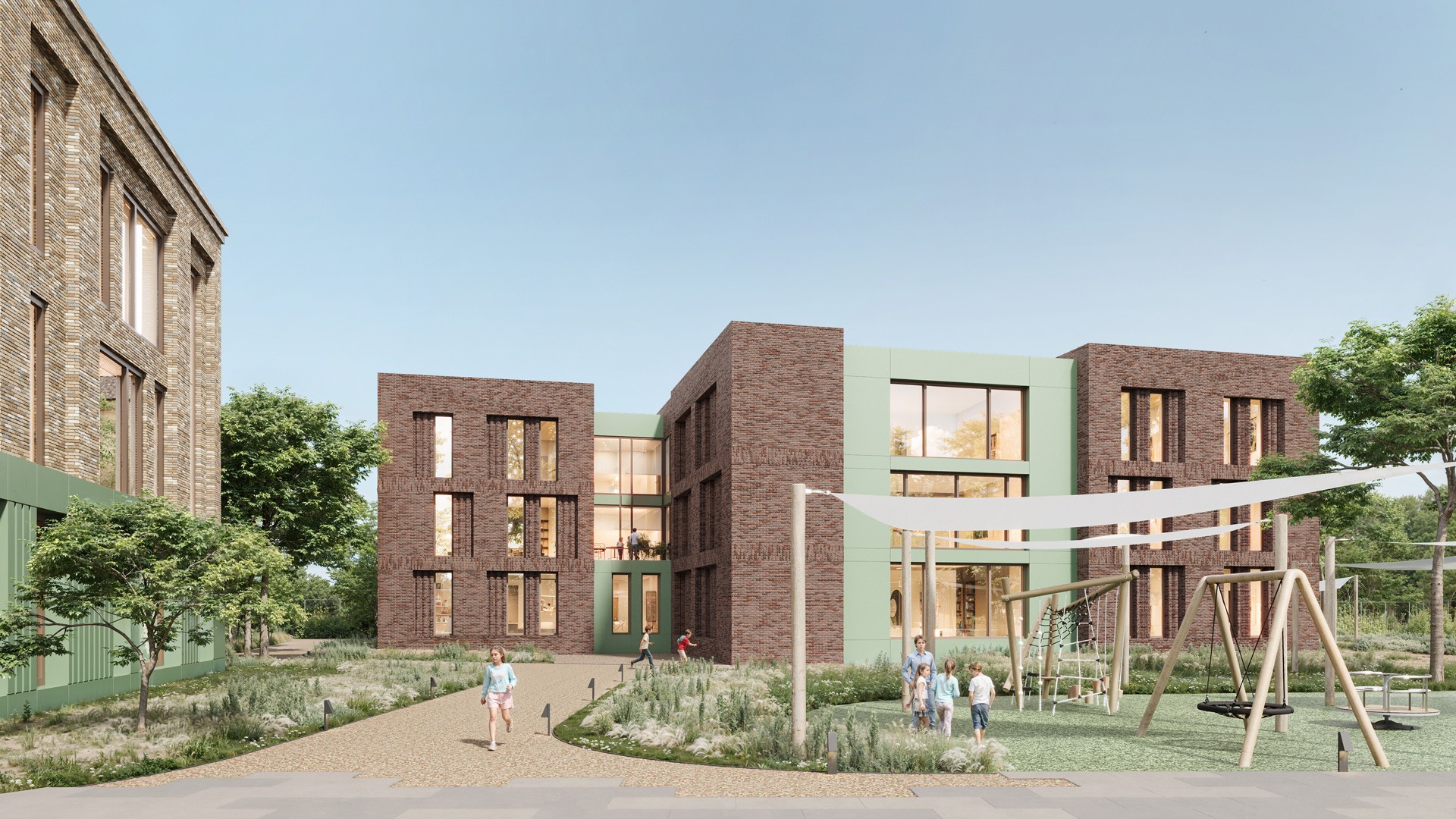
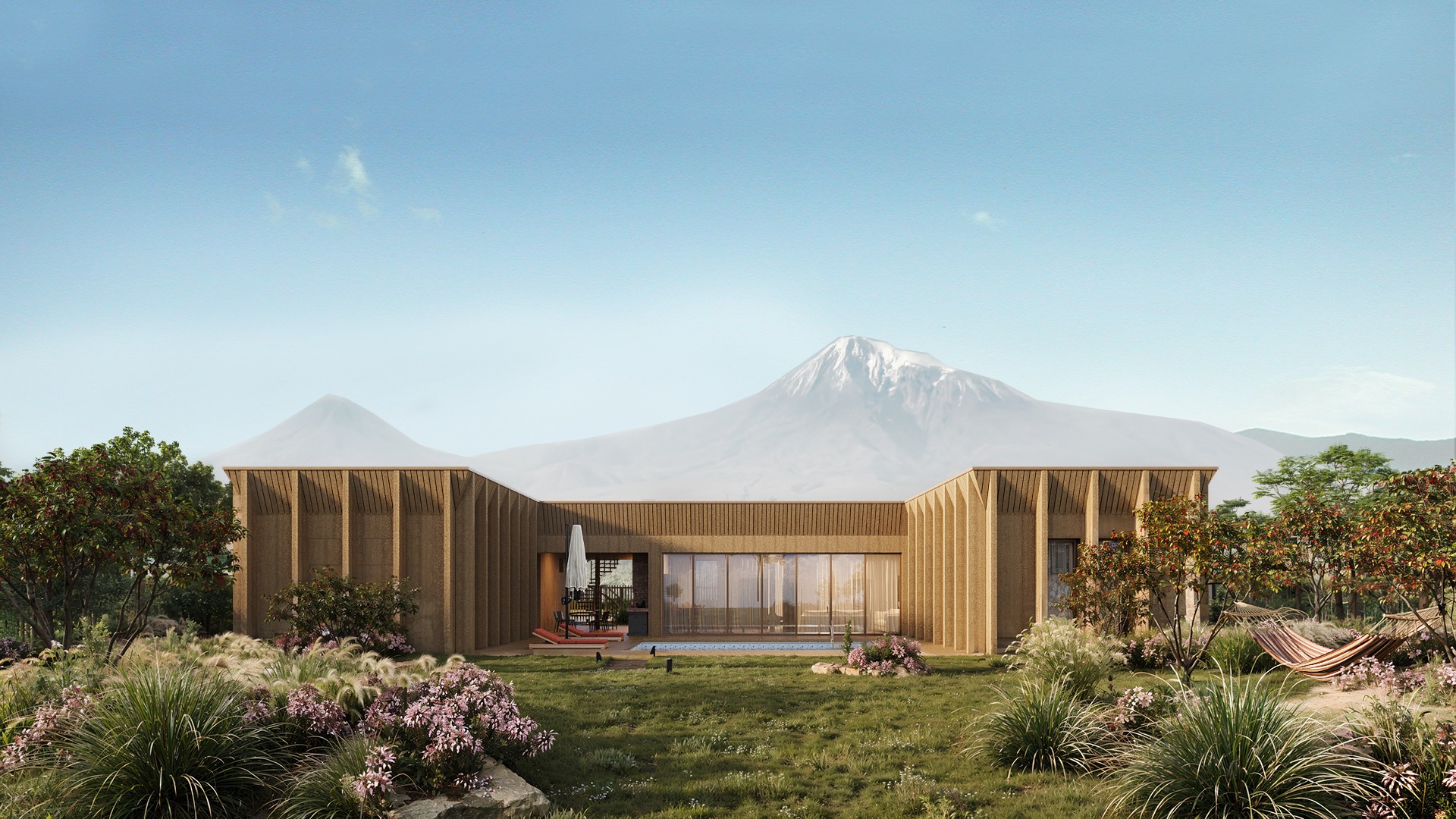
View of the primary school boarding house
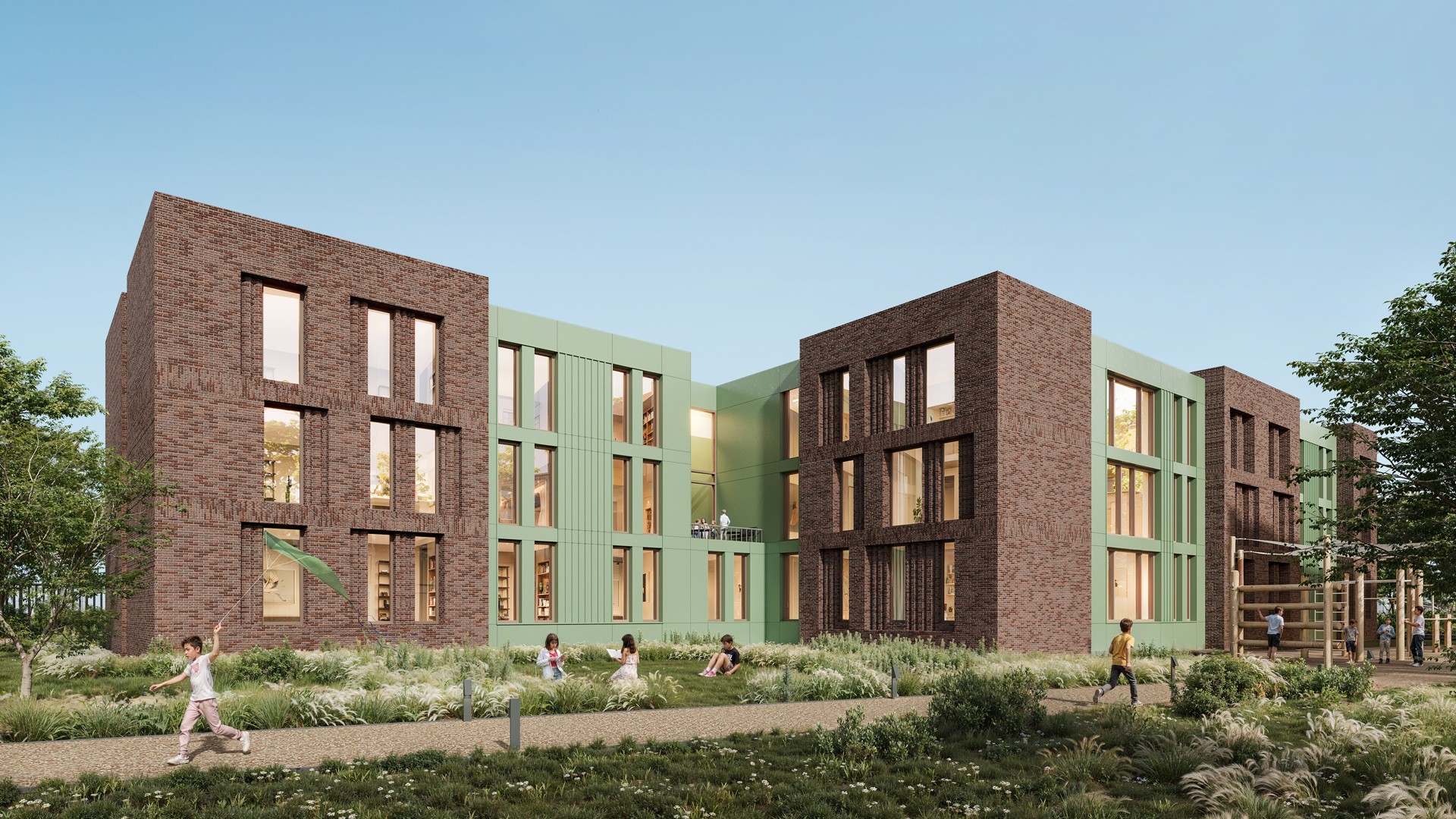
View of the secondary school boarding house
Planning solutions have been developed for the school building, the sports and wellness complex, and the primary and secondary school boarding facilities, taking into account the following factors:
various scenarios for the use of the school building and the amphitheatre (daily operation, ceremonial and formal events, the start-of-year arrival on September 1, and the independent operation of the FabLab, Natural Sciences, and Arts blocks);
efficient use of floor areas, minimisation of corridor and common circulation spaces, and optimisation of classroom sizes;
functional and spatial separation of primary and secondary school blocks, with segregated circulation flows for different age groups.
All campus buildings include a basement level accommodating engineering, technical, and service spaces, storage areas, and part of the catering facilities. For basement spaces requiring natural daylight, light wells are provided.
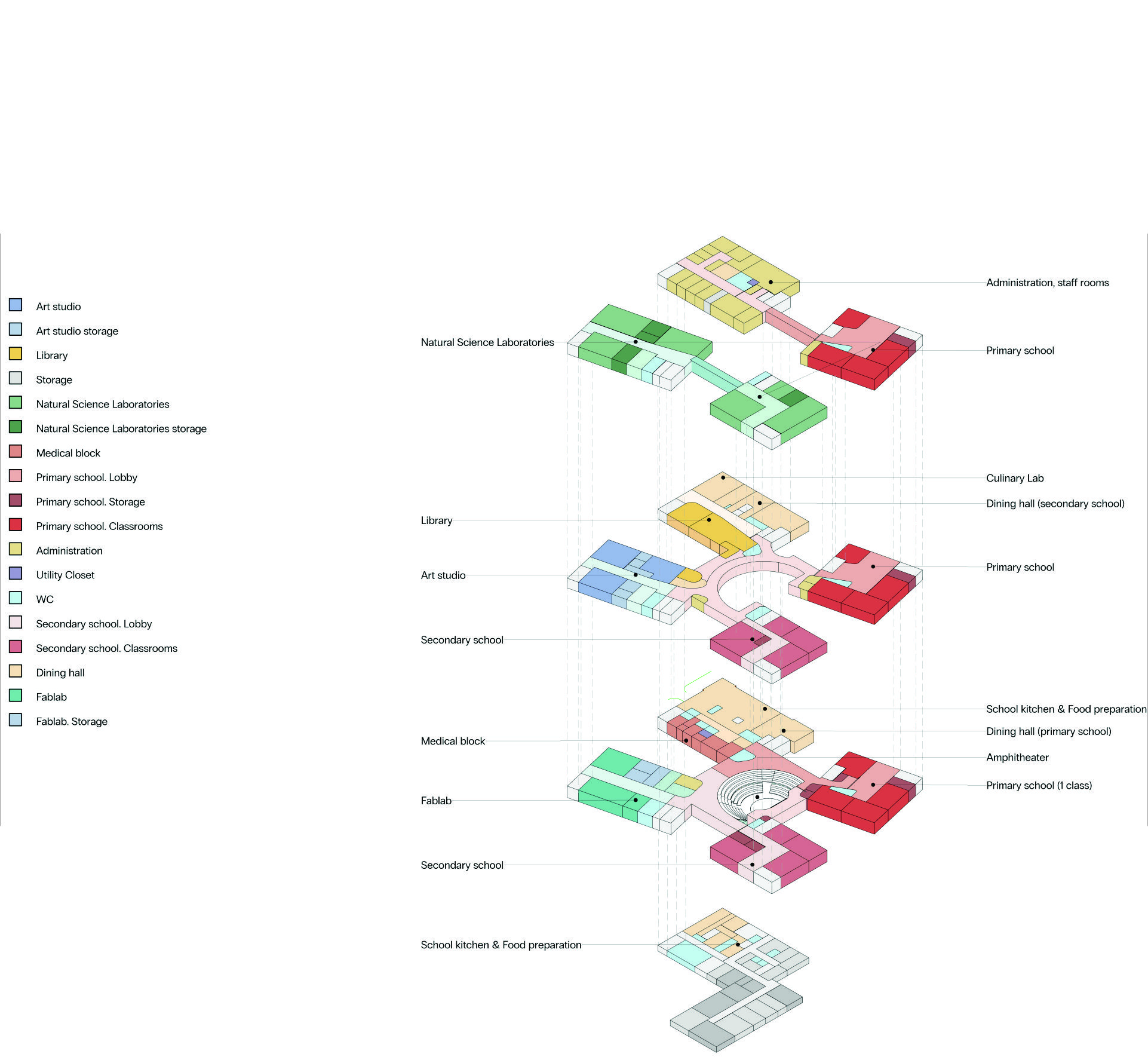
School building. Exploded view diagram
The primary and secondary school boarding facilities are designed with separate wings for boys and girls, as well as subdivisions based on age. A central common area on each floor is accessible to all residents and includes rooms for study and recreation, as well as a staff room for the dormitory supervisor. This arrangement helps minimise bullying and creates a safer and more comfortable living environment for the students.
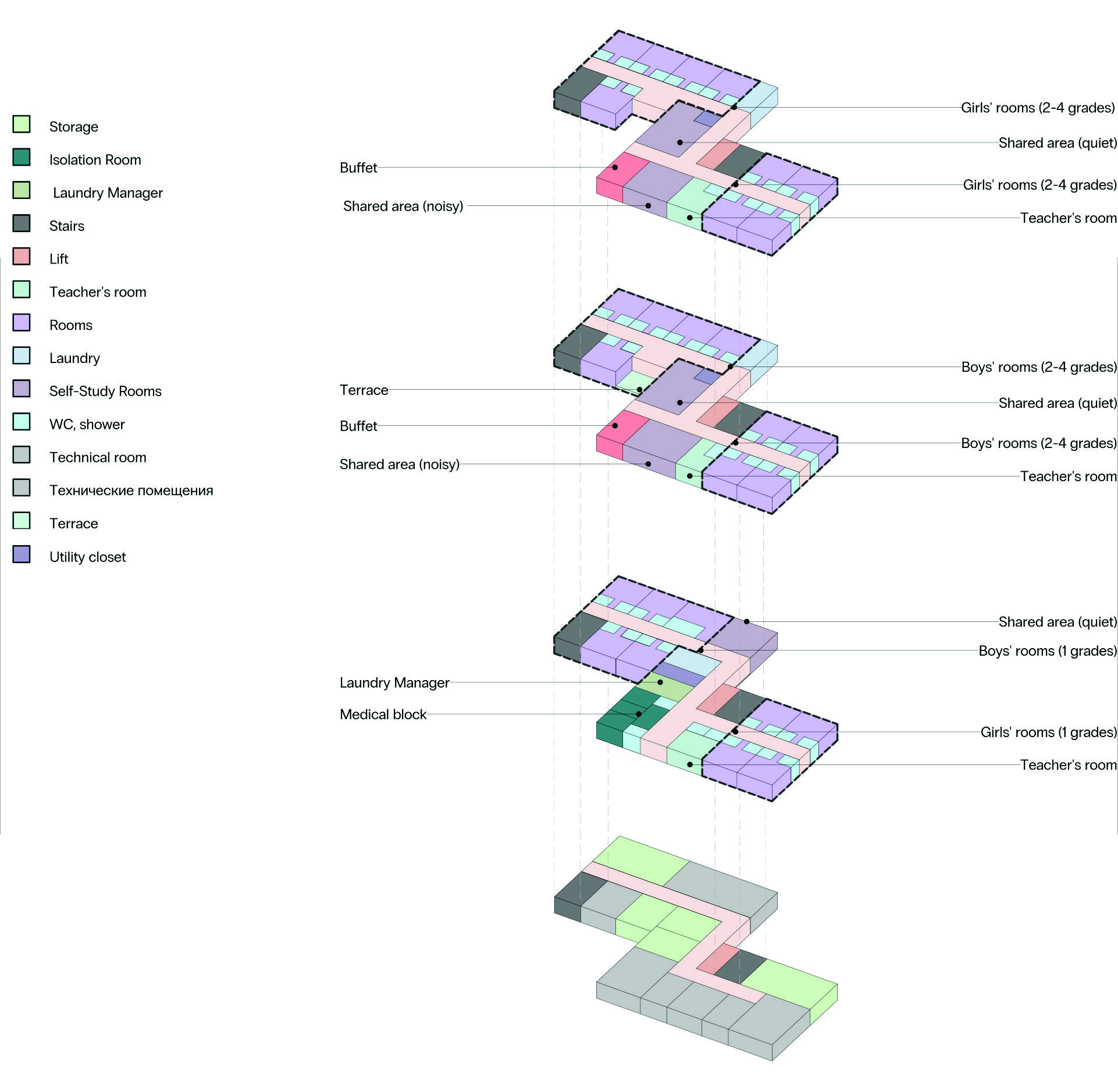
Primary school boarding. Exploded view diagram

Secondary school boarding. Exploded View Diagram
Detailed layouts have been developed for the residential units of the primary and secondary school boarding facilities, as well as for rooms designed for persons with reduced mobility.
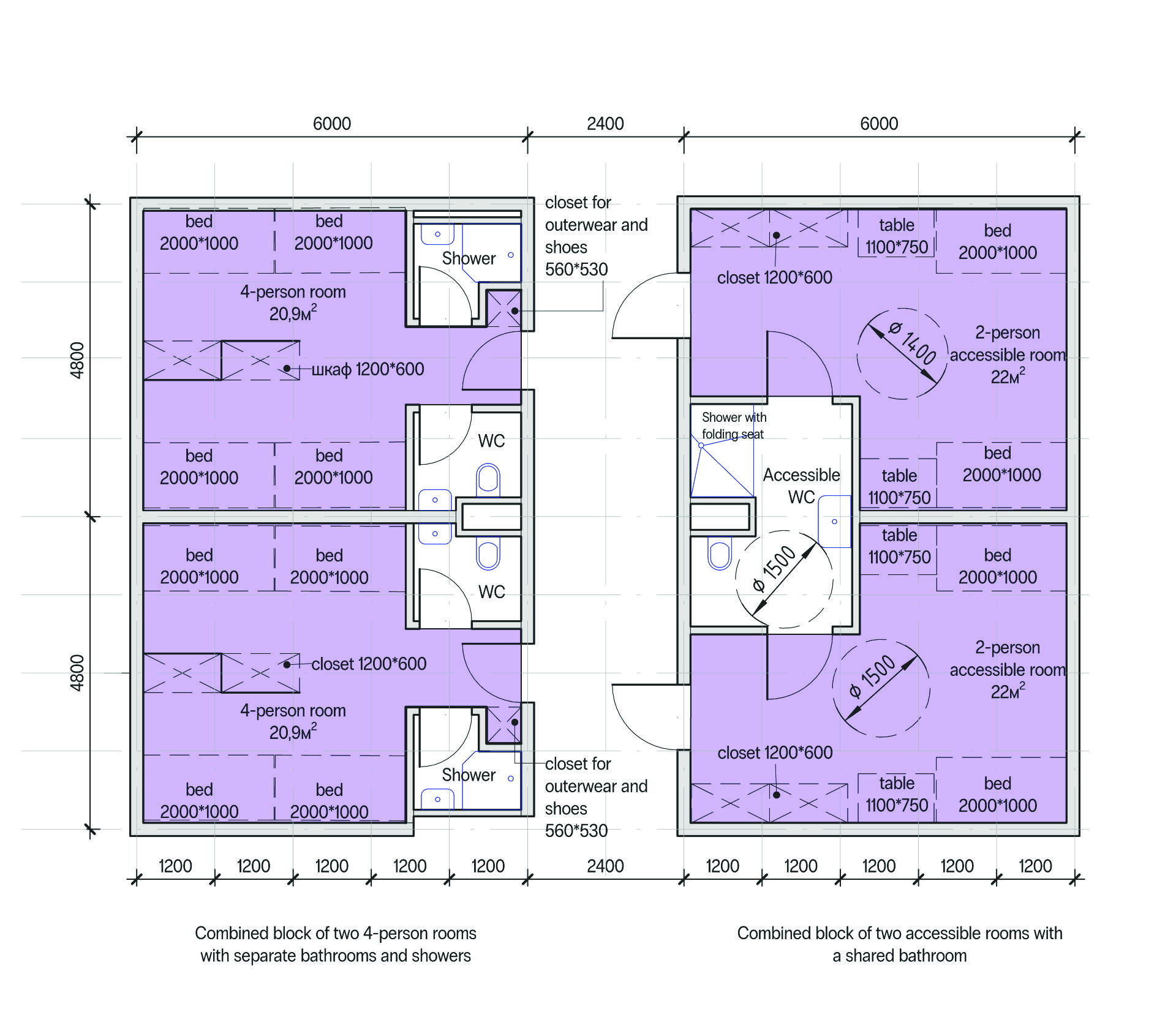
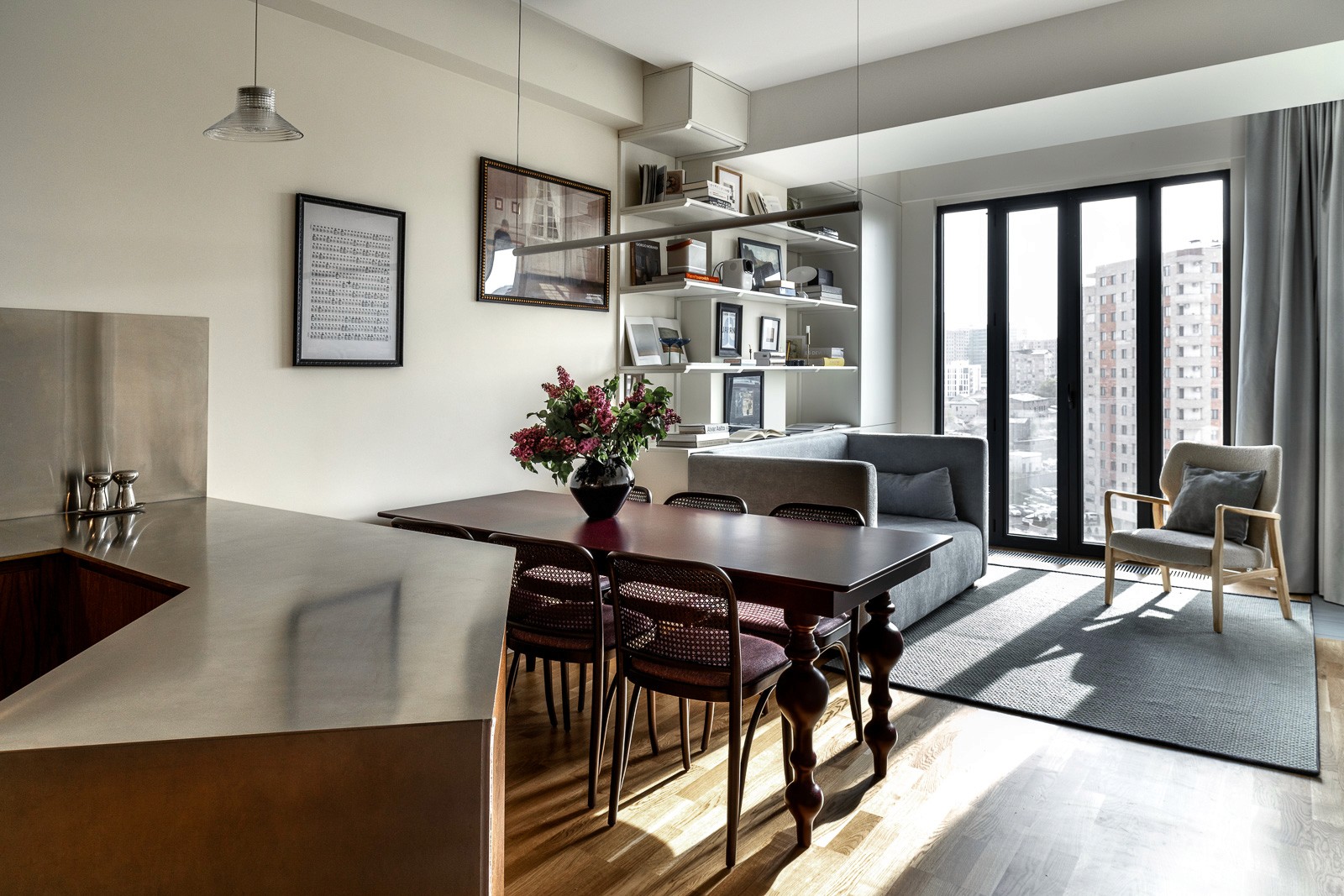
Residential unit layout
The Sports and Wellness Complex is located adjacent to the checkpoint near the daily entrance to the campus, allowing it to operate independently from the school building. The complex includes a heated swimming pool, a sports hall, an athletics hall (which can also function as a stage), a wrestling hall, a gym, and an administrative block on the third floor.
The site also features a stadium with stands and a running track, as well as an outdoor workout area.
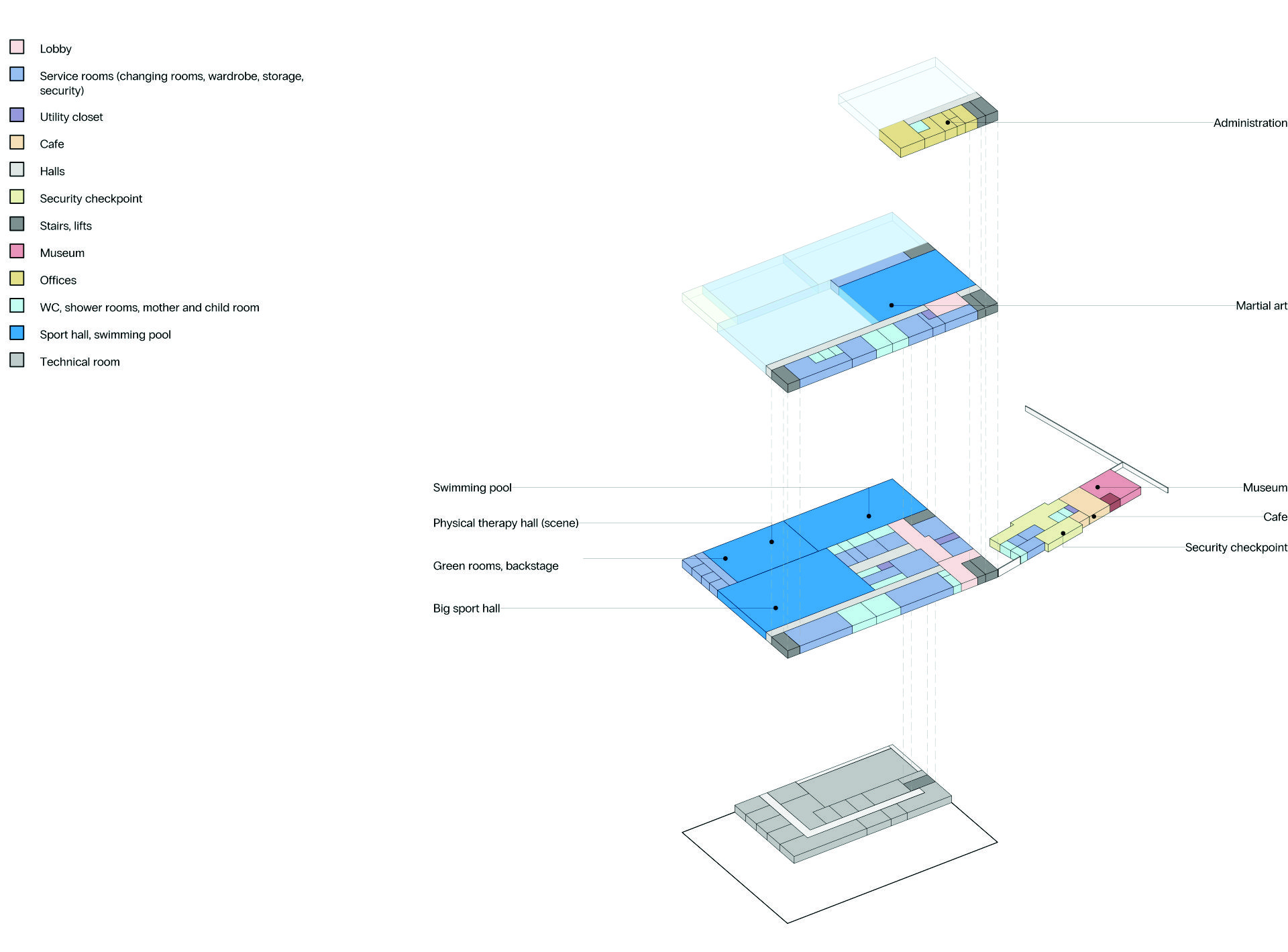
Sports and Wellness Complex, Security Checkpoint, Café, Museum. Exploded view diagram
Thus, the project represents not only a solution to current requirements but also a prototype for constructing similar campuses across Russia, setting a new standard of quality in educational environments and residential facilities.
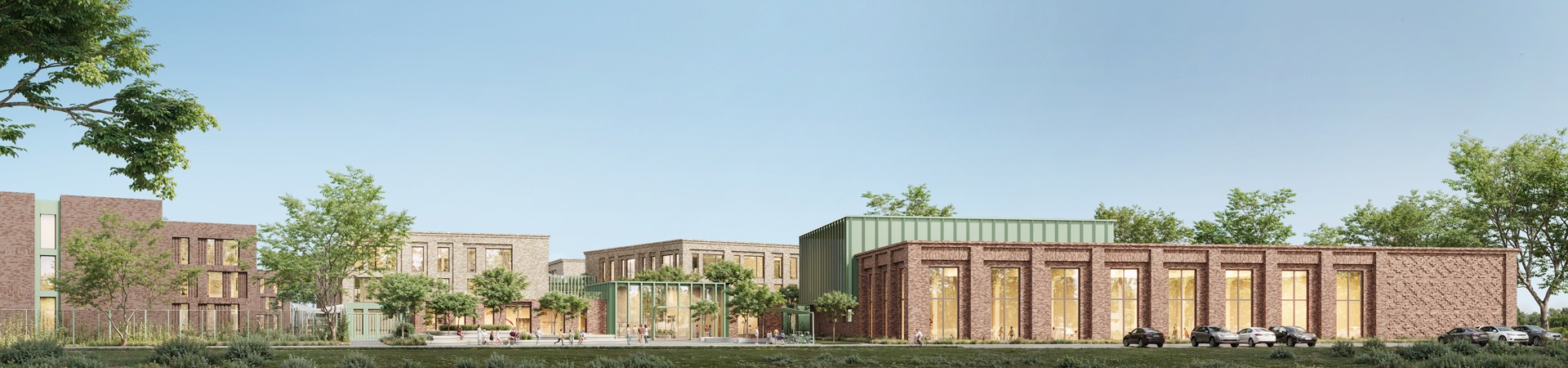
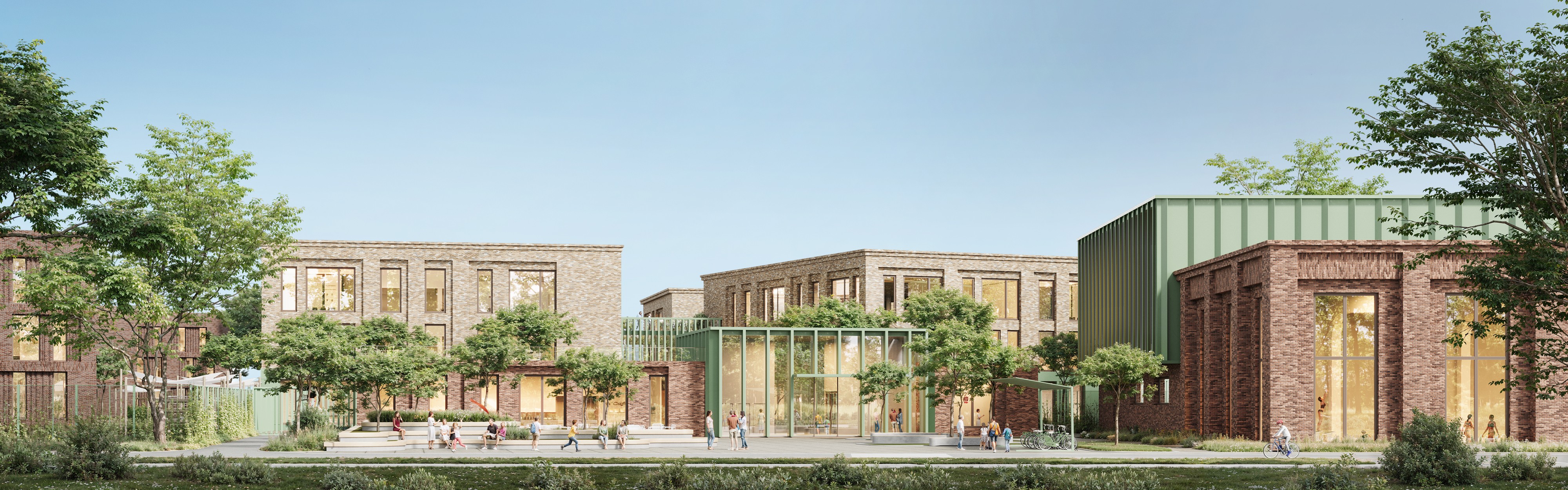
Facade design option. Campus overview from the daily entrance