Typology
Private architecture
Year
2026
Status
Conceptual design
Stage
Concept
Size
380 m2
Discipline
Architecture, landscaping, interiors, technology
Location
Yerevan, Armenia
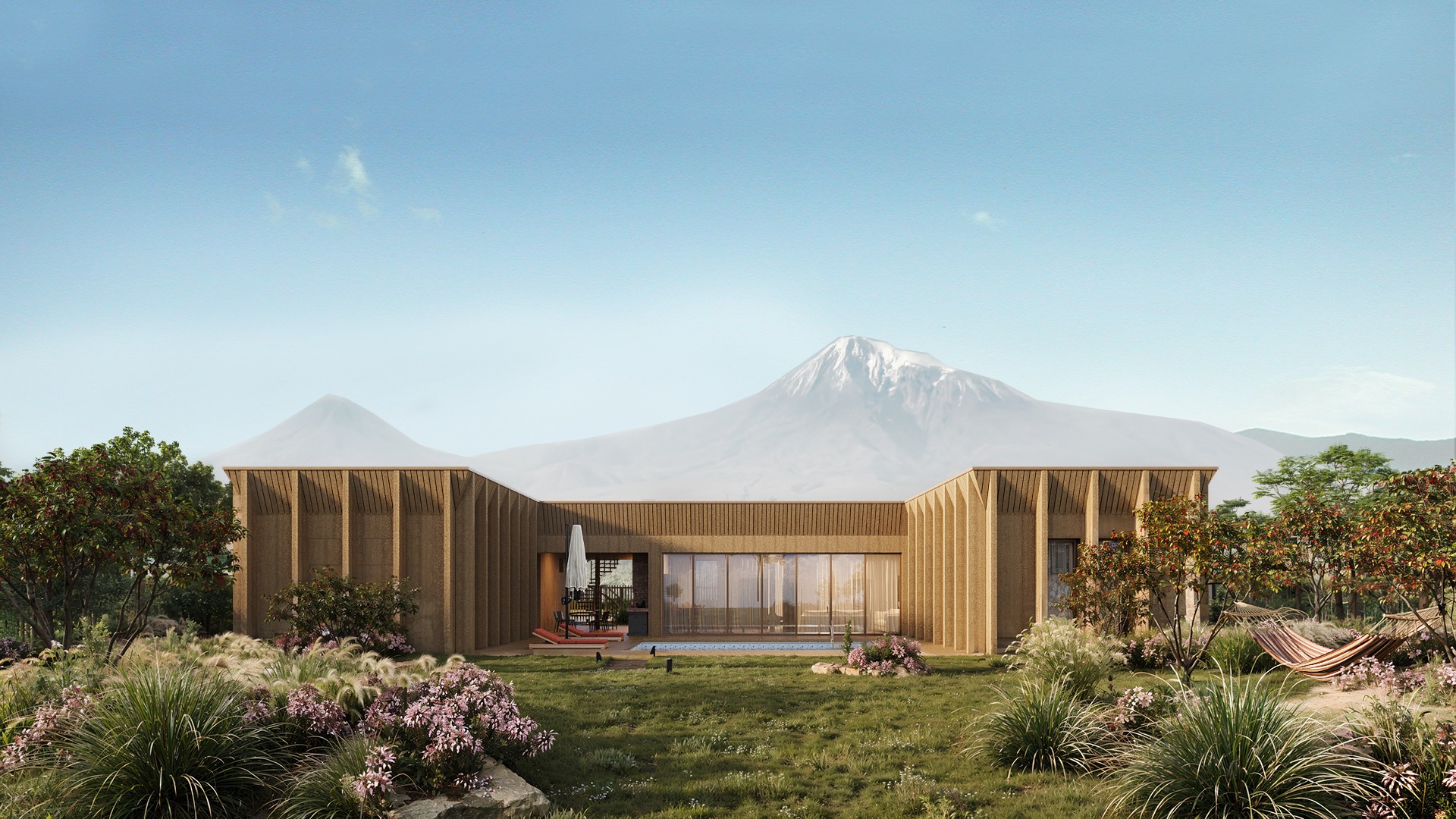
There are homes one returns to — and then there are homes that quietly shape the rhythm of everyday life. This villa belongs to the latter. It is conceived for a family in constant motion: children racing up and down the stairs, adults setting a generous table, conversations stretching late into the night, only to begin again in the morning — with the aroma of coffee and freshly baked bread.
The ground floor is defined by energy and flow.
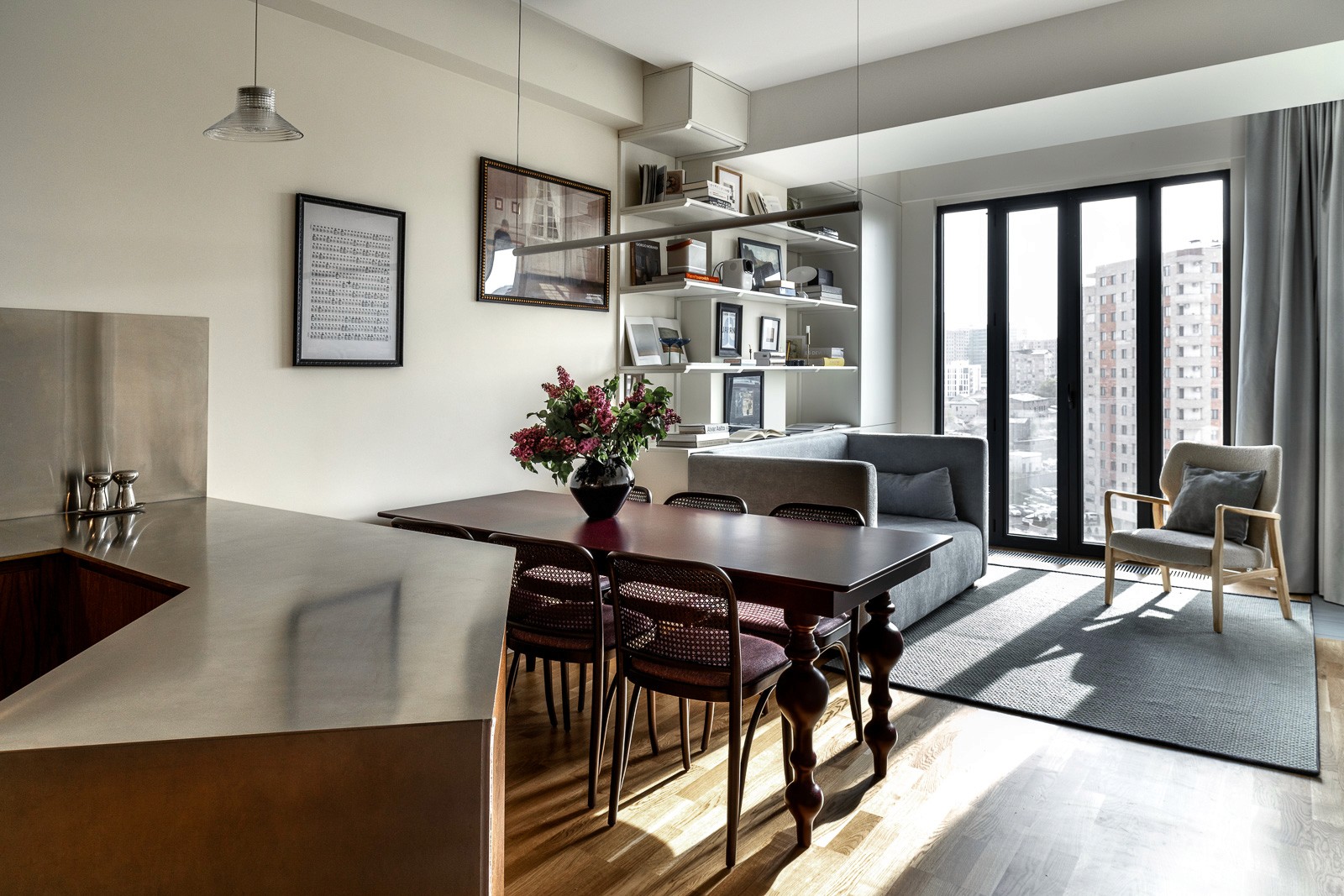
The living and dining areas are not divided, but gently dissolve into one another, much like the conversations that inhabit them. At the centre, a large table anchors the space — a place for gathering, for sharing, for extending hospitality without effort.
The kitchen reflects a home where cooking is not occasional, but essential. It is organised into two distinct yet connected zones: one for preparation, one for the process itself —ensuring a seamless, uninterrupted rhythm. From here, the space extends outward: in the warmer months, fire, air, and garden become a natural continuation of the kitchen.
Guest accommodation is thoughtfully integrated into the ground floor, with two private bedrooms, each with its own bathroom. These are not transient spaces, but rooms designed to offer comfort and a sense of belonging — even for a short stay.
Morning begins with movement. A dedicated gym opens toward the mountains, where natural light replaces the need for urgency. Here, exercise feels less like routine and more like a ritual.
All elements connected to motion — cars, equipment, daily logistics—are resolved with clarity. Each has its place, allowing the life of the house to unfold without interruption.
Upstairs, the atmosphere shifts.
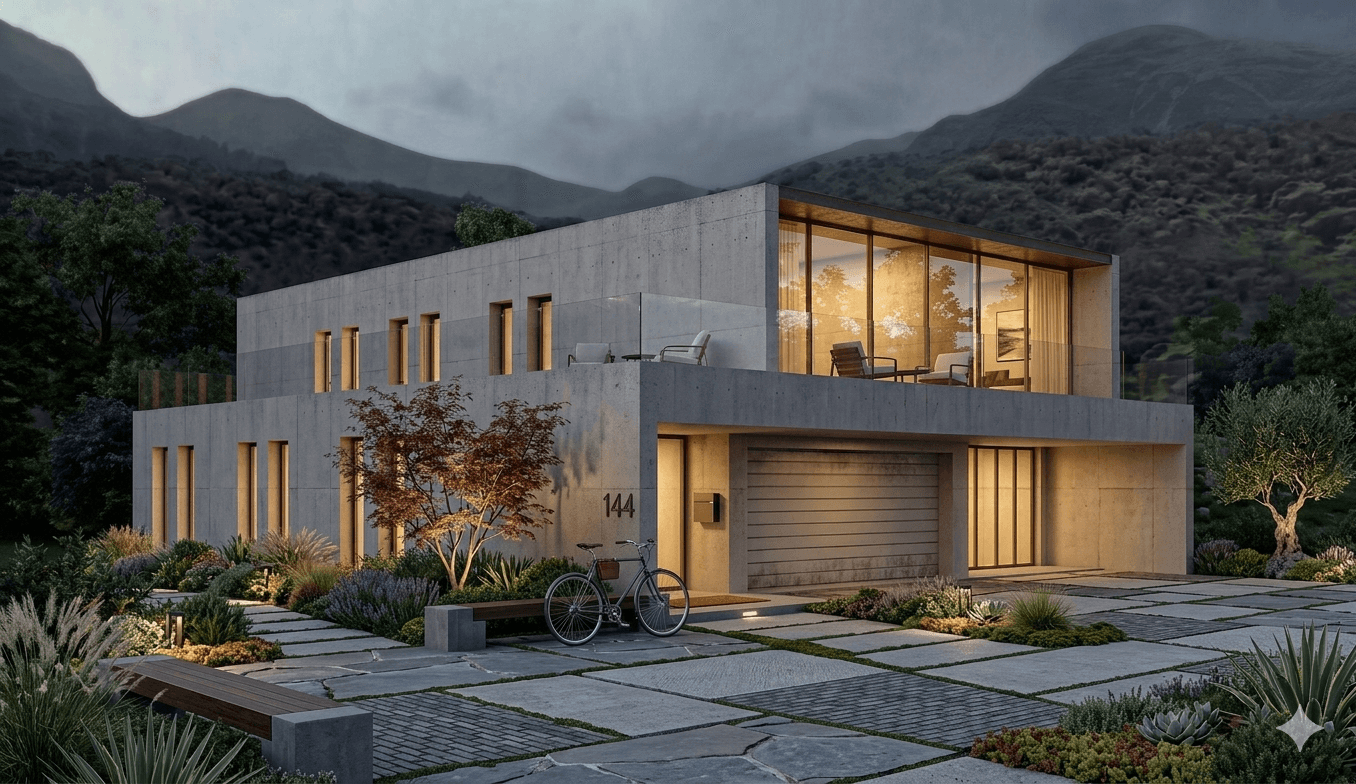
The pace slows, the tone softens — this is the domain of privacy. The master suite becomes more than a bedroom; it is an experience. Mornings unfold against an expansive view of mountains and sky, framed by wide windows that draw the landscape inward.
The children’s rooms are conceived as independent worlds — spaces that embrace growth, spontaneity, and individuality. There is room here for play, for noise, for the unstructured rhythms of childhood.
Balconies introduce an additional layer to the home — threshold spaces that offer both retreat and connection. Places to step away, or to gather once more.
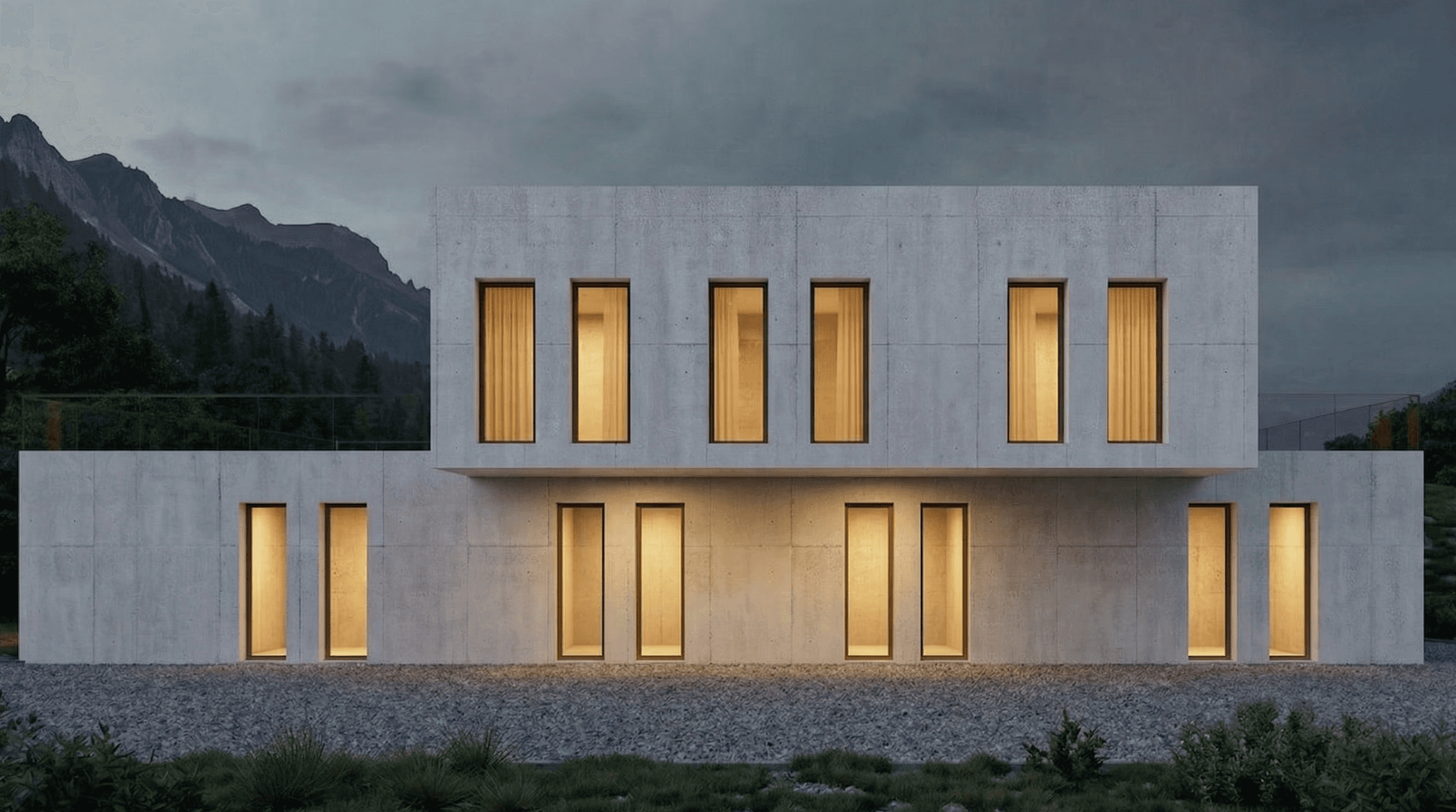
Architecturally, the house speaks in a restrained, contemporary language. Concrete and glass define its character — honest, composed, and of its time. Clean lines and clear volumes replace ornament, allowing material and proportion to take precedence.
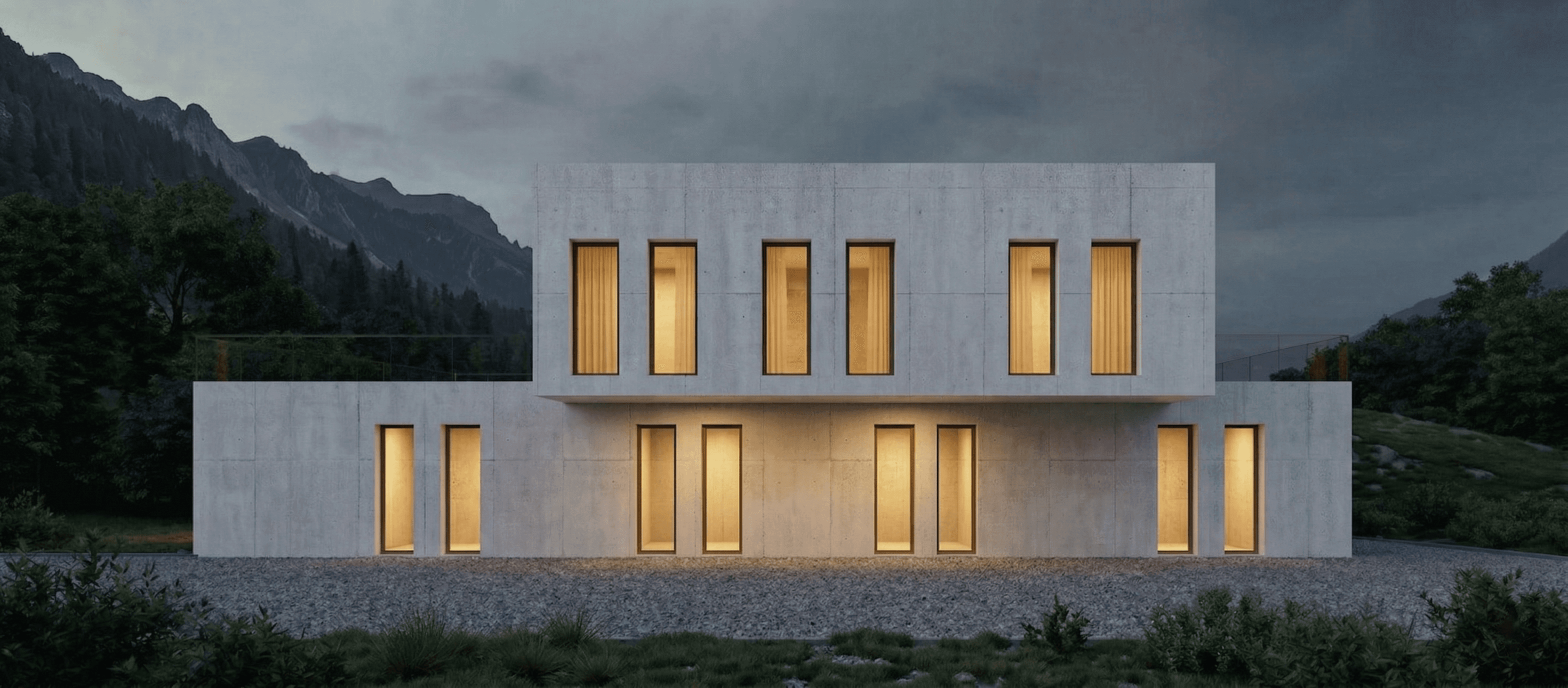
There is, however, a deeper context. Armenia’s tradition of building in stone — where material carries weight, texture, and memory — is not replicated, but reinterpreted. This house does not imitate; it understands. And in that understanding, it finds its own quiet authenticity.